The problem with cliff risk
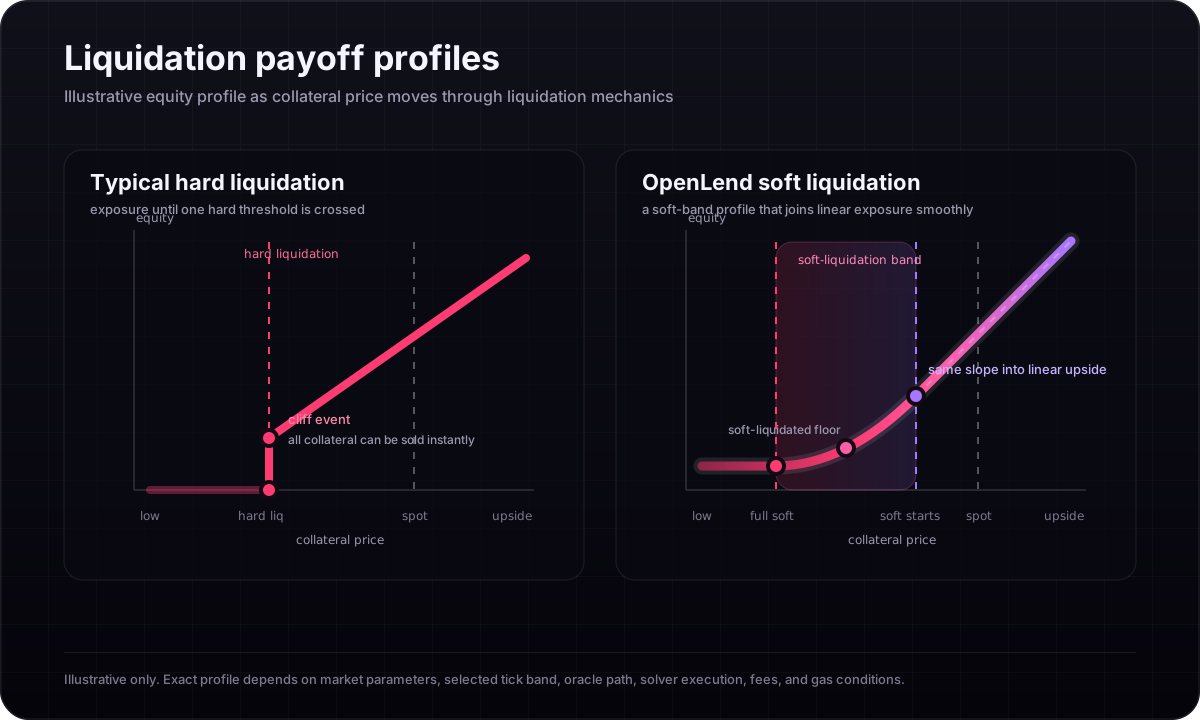
Most lending markets make liquidation feel binary. A position is healthy until it is not. When the hard threshold is crossed, liquidators race to repay debt, seize collateral, and extract a penalty. That model is simple, but it concentrates risk at the worst possible time: when price is moving, liquidity is thin, and users are least able to react.
The hidden cost is not only the penalty. It is the shape of the risk. A user can be far from liquidation for hours and then suddenly exposed to a discontinuous event. Protocols inherit the same discontinuity: bad debt is unlikely most of the time, then suddenly urgent.
A liquidation band changes the shape
OpenLend positions define a price interval below the current oracle price. The top of the interval is where soft liquidation starts. The bottom is where the position has been fully converted from collateral token into debt token.
Inside that interval, liquidation is incremental. A solver can move the internal AMM cursor one tick at a time, buying collateral from the position and paying debt token back into the controller. The position loses collateral gradually instead of being seized all at once.
- Above the band: the position behaves like a normal overcollateralized borrow.
- Inside the band: collateral is swapped into debt token by solvers.
- Below the band: the position is fully soft-liquidated before the underlying lender's hard threshold should matter.
Why ticks are useful
Ticks make the liquidation path explicit. A wide band gives the position more room to react and distributes execution over a larger price interval. A tight band is more capital efficient, but it concentrates more execution into a smaller move.
This is why OpenLend surfaces the band as a first-class parameter. The user is not only choosing how much to borrow. They are choosing the geometry of their liquidation path.
The role of solvers
Solvers are external actors that execute the soft-liquidation trade when the oracle price and the internal cursor diverge enough. They receive a discount for doing useful work, but that discount is bounded by protocol parameters.
The important property is that liquidation work is no longer reserved for the final emergency state. The market can rebalance earlier, in smaller pieces, with observable state at every tick.
What users should watch
A position has two prices that matter visually. The oracle price drives health and LTV checks. The internal cursor shows how far soft-liquidation execution has actually progressed. When the oracle moves quickly, it can sit deeper in the band than the cursor until solvers fill the gap.
That distinction is core to reading an OpenLend position. Health factor answers whether the debt is safe against collateral value. Cursor position answers how much soft-liquidation work has already happened.